
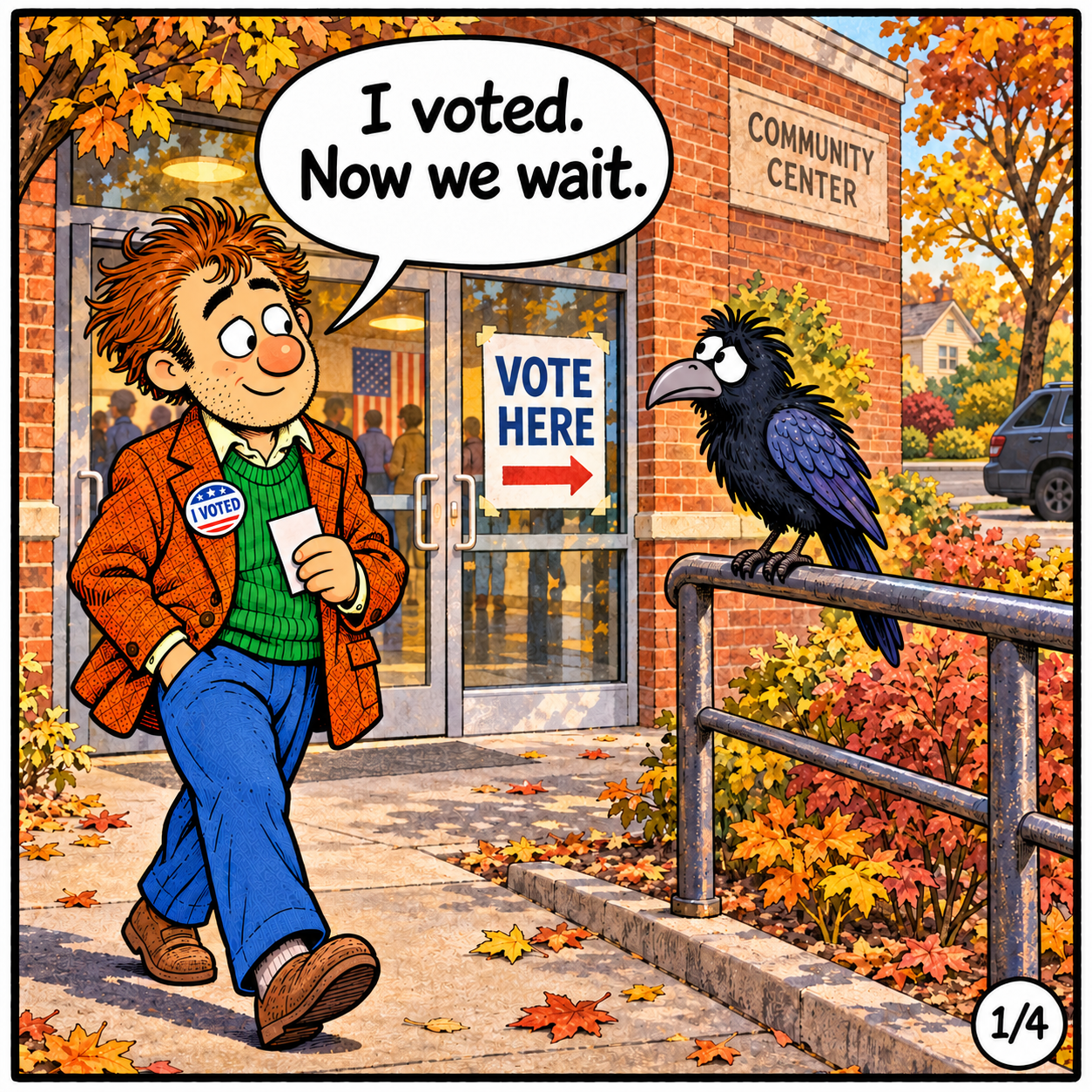
Comic
I Voted. Now We Wait.
Voting is the easy part. The crow wants to know what happens after — a four-panel Election Day comic on civic participation and the part nobody talks about.
Read essay
Greater Intent
Voting is the easy part. The crow wants to know what happens after — a four-panel Election Day comic on civic participation and the part nobody talks about.
Read essay
After a dozen radio spots promoting We the People… Are Bad at This, I learned what makes a guest worth booking — and why this civic conversation is landing right now.
Read essay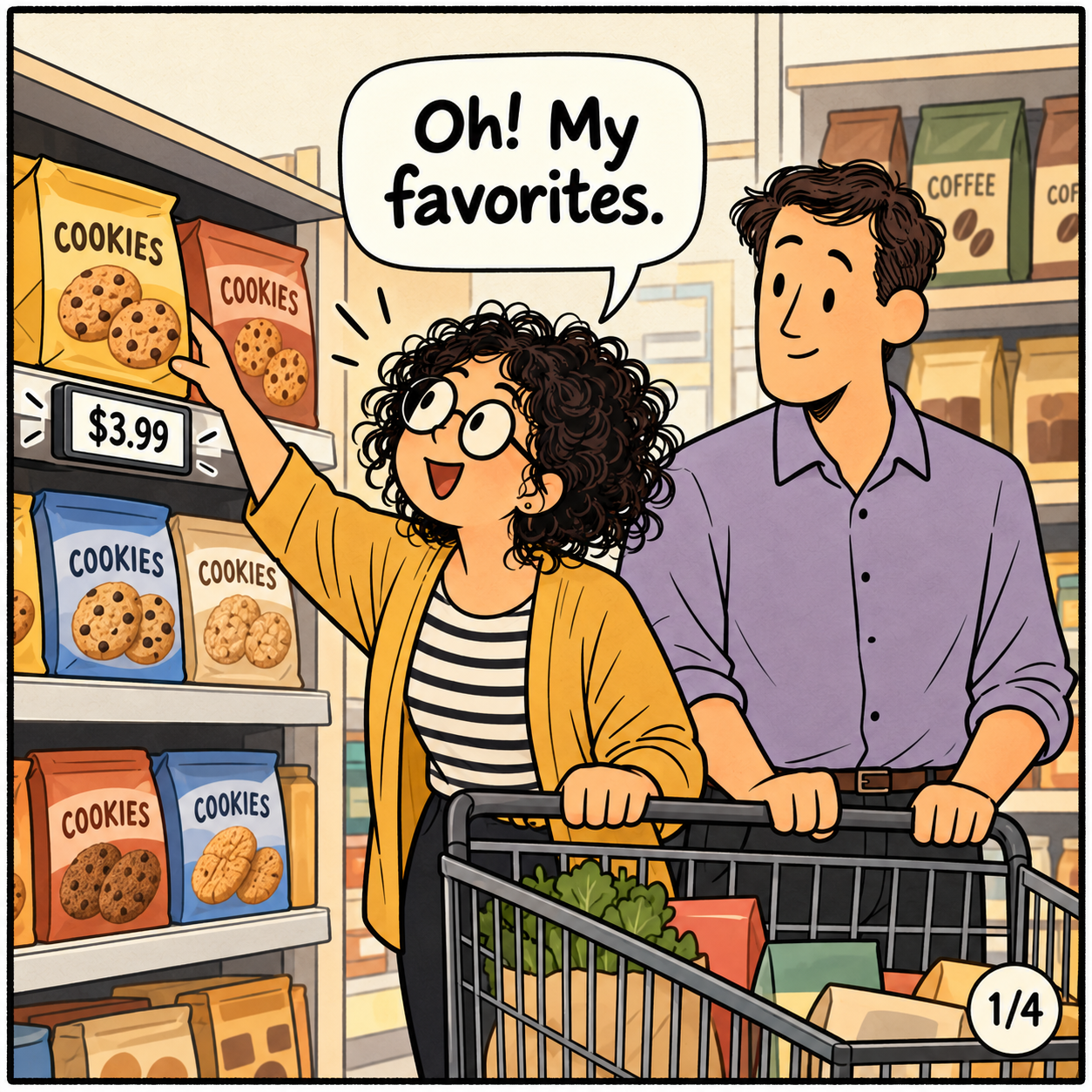
She said 'favorites.' The shelf was listening. A four-panel look at AI-powered pricing and the small ways we've already started negotiating with machines.
Read essay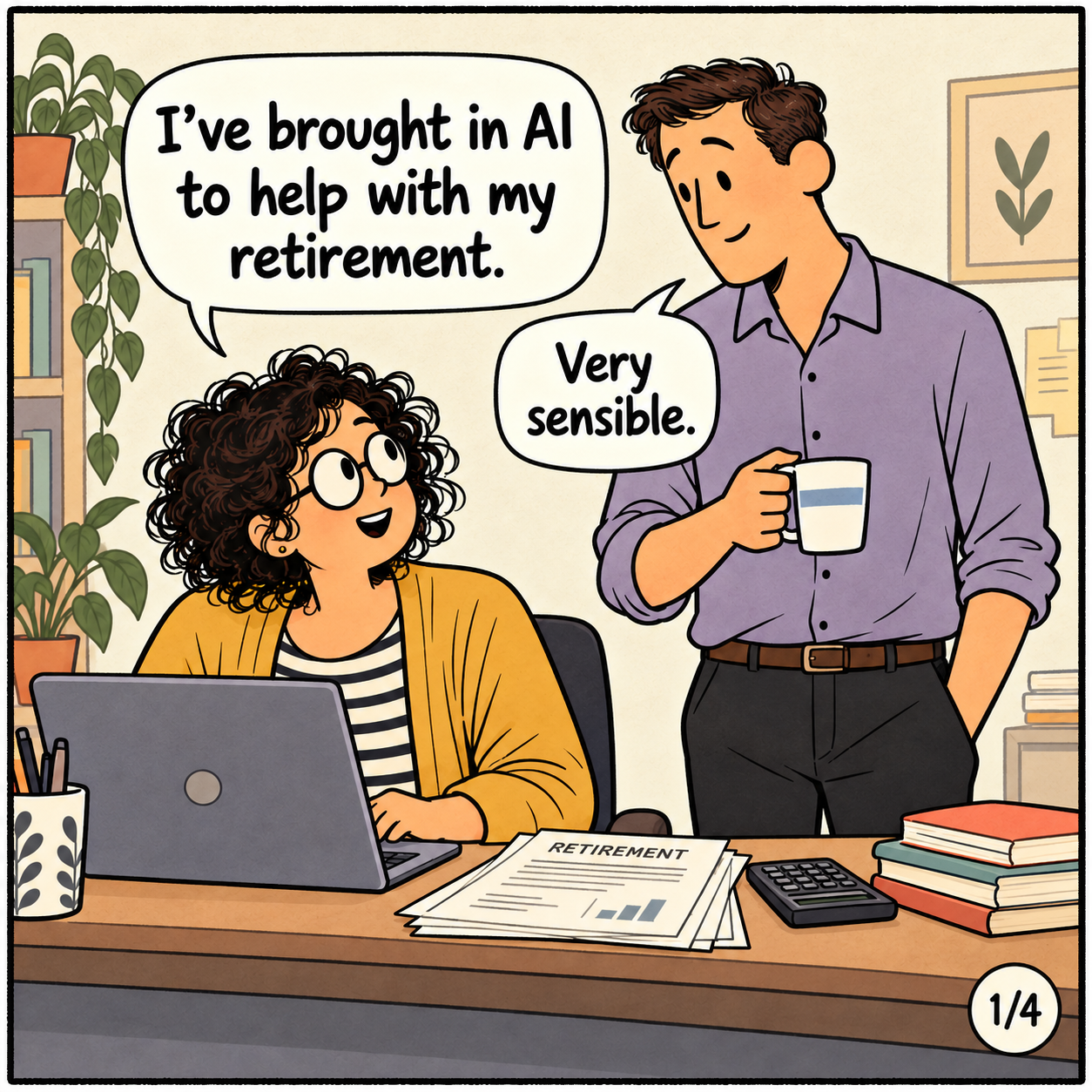
She brought in AI to help with her retirement plan. Very sensible. Then she asked it to pick the winning lottery numbers. It declined. She asked which slot machine, then. The consultant lacks vision.
Read essay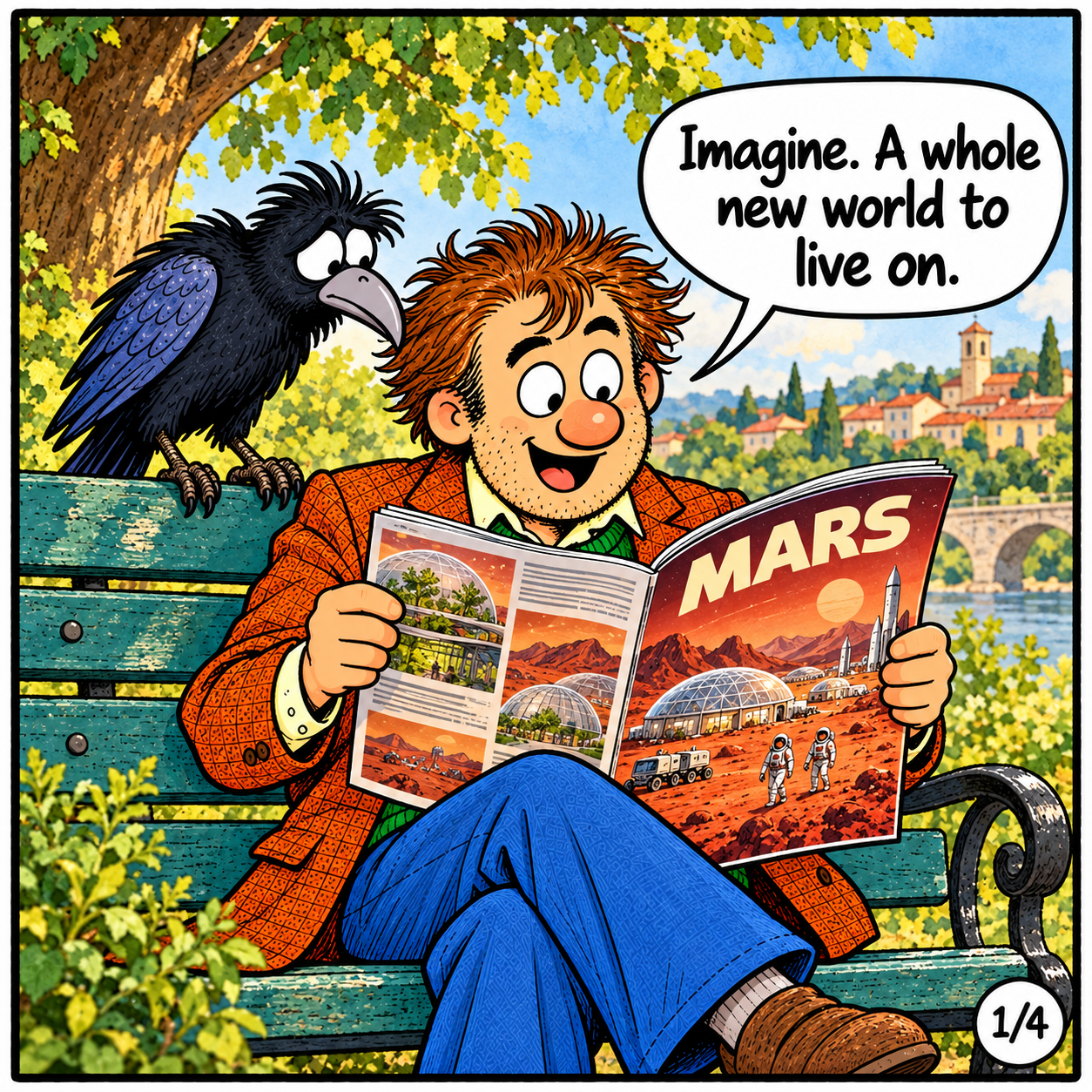
He's got the blueprints. Air, water, food, somewhere safe to live. The crow found one that already has all of that. It's right behind them.
Read essay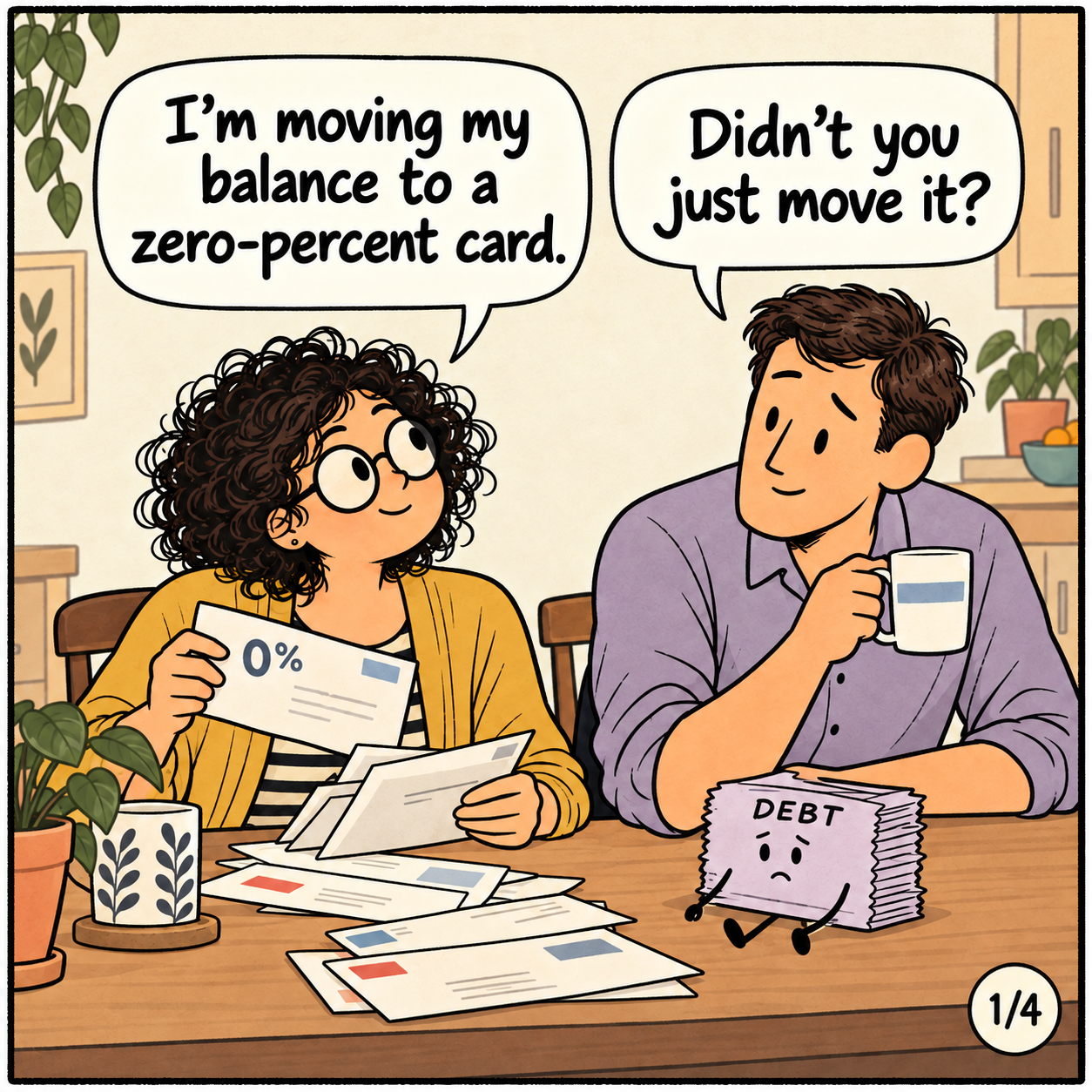
She's moved her balance to three banks this year. The debt is fine. It's been to three banks this year. She'd like a fresh start too.
Read essay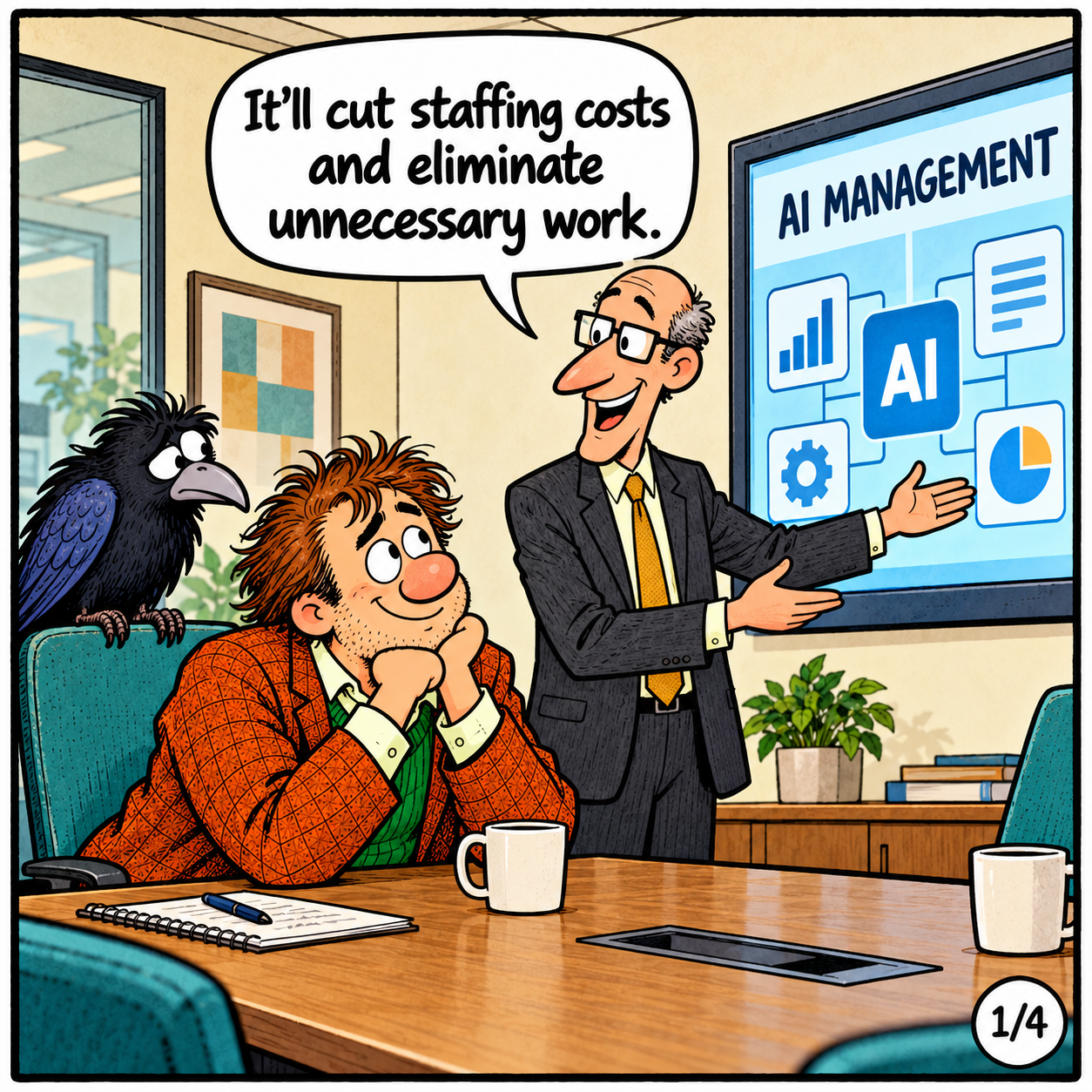
The AI promised to cut staffing costs and eliminate unnecessary work. It did. Turns out, you were the unnecessary work.
Read essay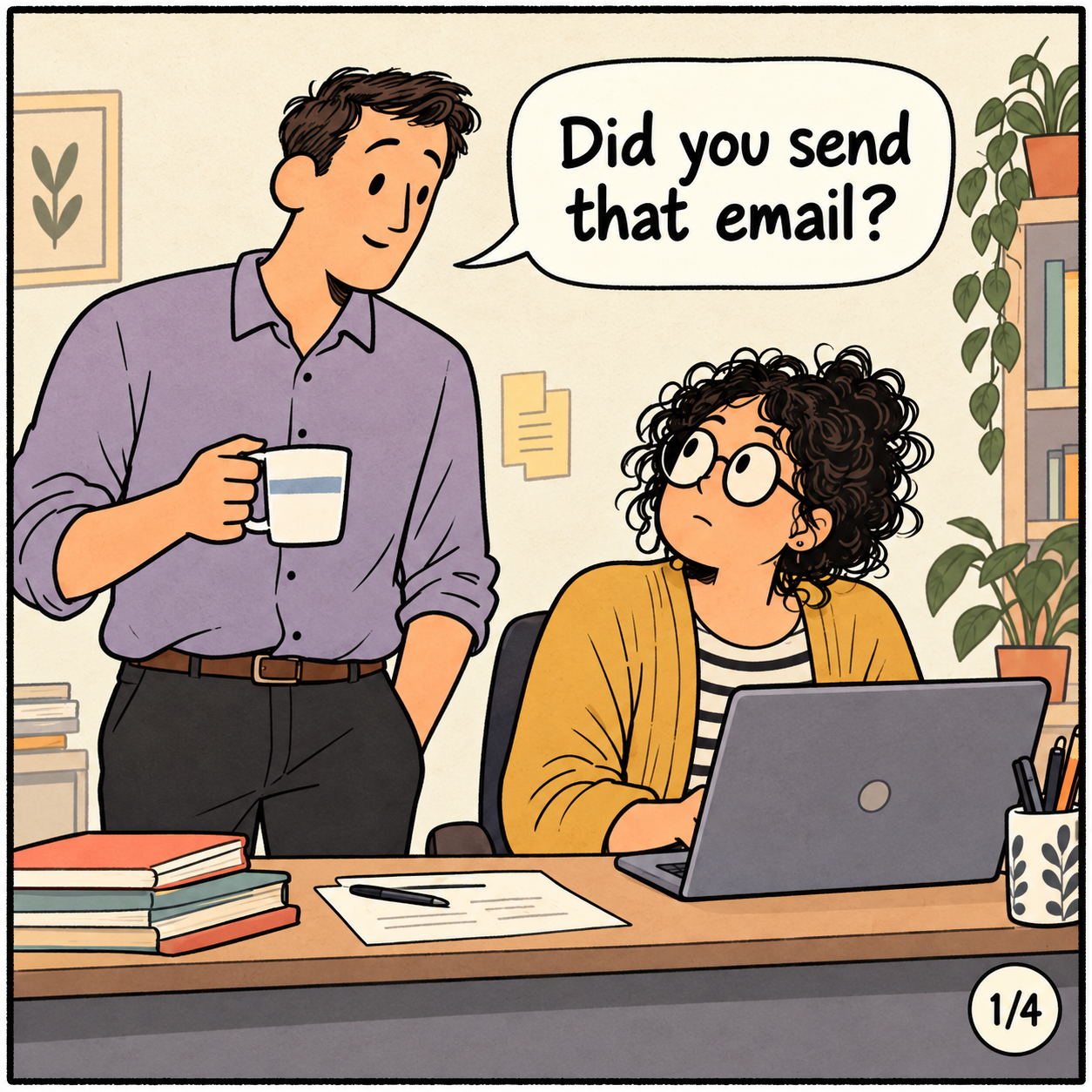
She's been staring at a three-word reply for forty minutes. He thinks it's about the email. It isn't.
Read essay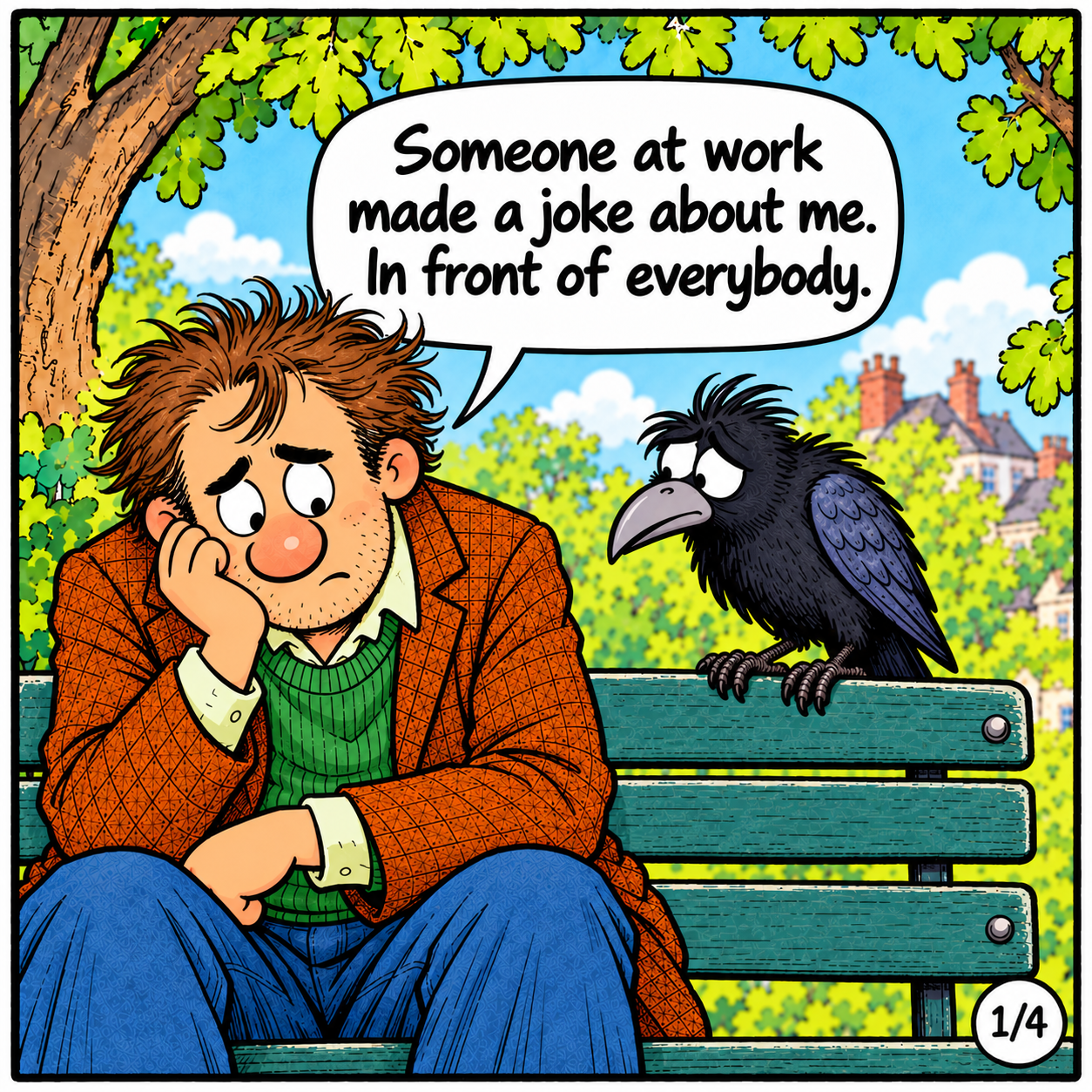
Someone made a joke at work. In front of everybody. The crow didn't wait for the punchline.
Read essay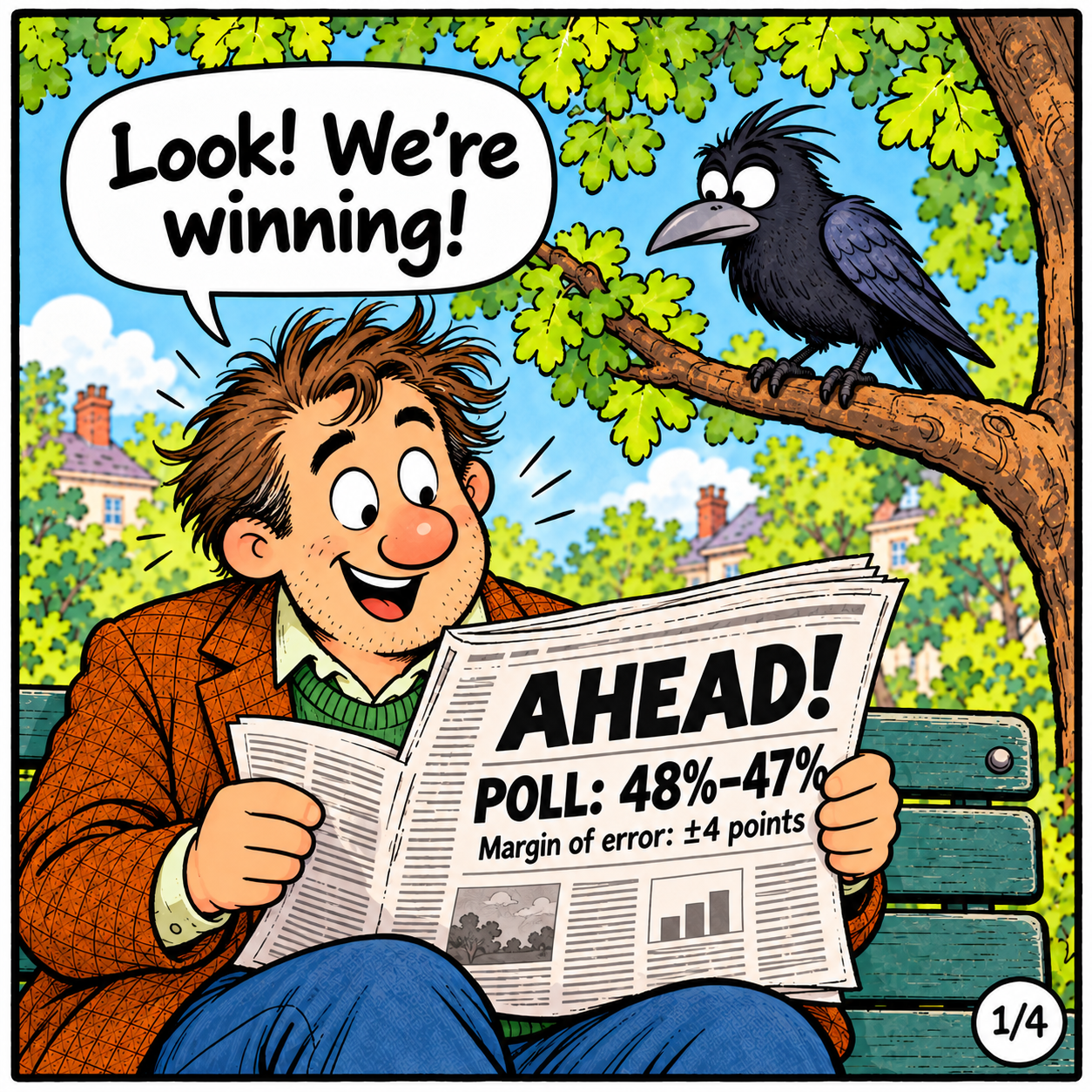
When a poll shows 48%–47% with a ±4 point margin of error, one candidate is definitely winning. Probably. Maybe. A four-panel comic on the numbers we choose to believe.
Read essay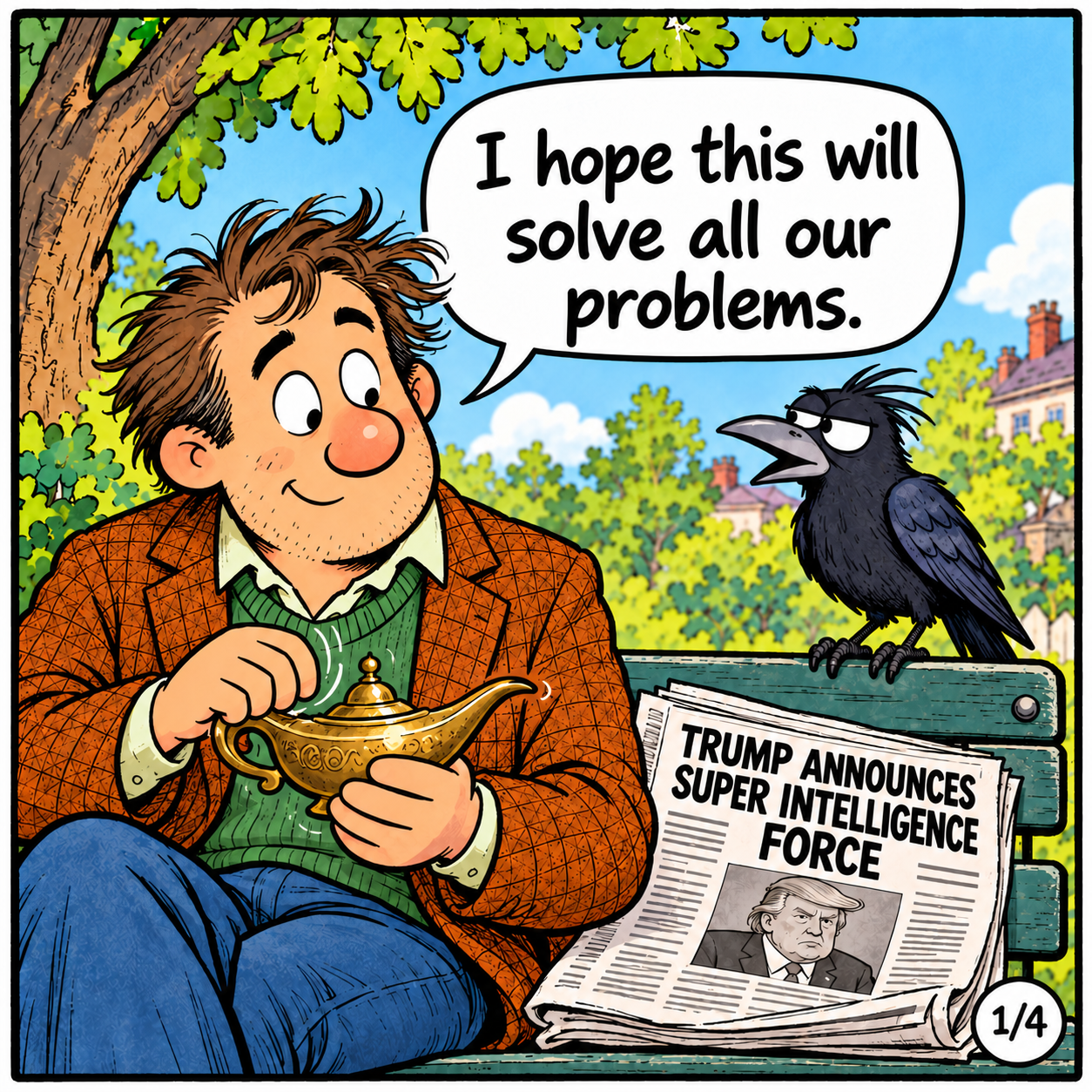
A man reads about a Super Intelligence Force and reaches for a magic lamp. The genie shows up. The wish is a good one. The answer is not what he hoped for.
Read essay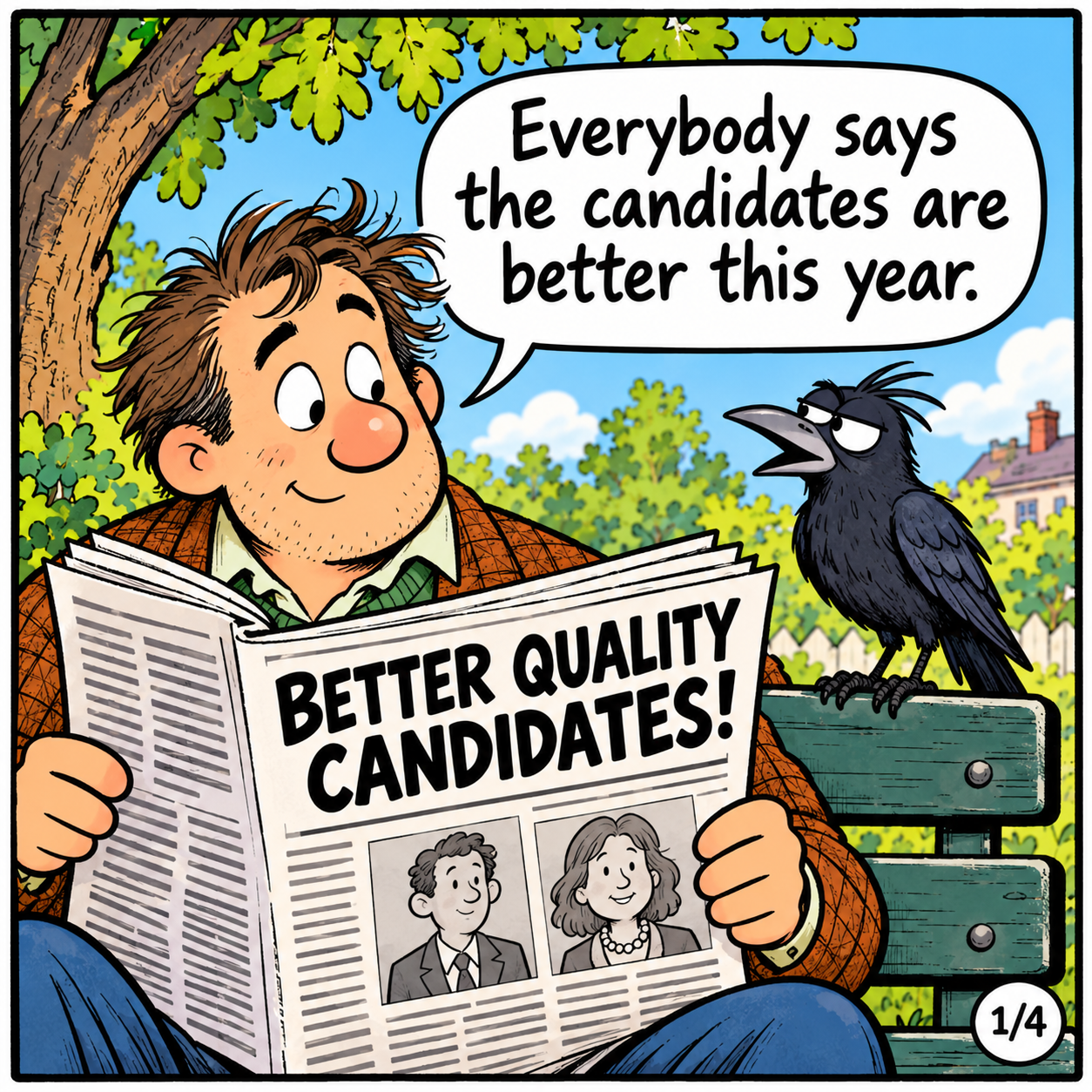
Everybody says the candidates are better this year. The crow has a follow-up question. A four-panel comic on what we actually mean when we say that.
Read essay
It didn't look like a crisis. It looked like efficiency. But when a leader's caring quietly switches off, the whole organization feels it — even if no one can name what changed.
Read essay
We keep treating burnout as a personal failure — a lack of resilience, boundaries, or self-care. But for caring employees, burnout is almost always a systems problem. Here is the reframe leaders need.
Read essay
Robert Bates shares the personal turning point that led him to write We The People… Are Bad At This — and why he believes this is the book this moment demands.
Read essay
Political polarization isn't just an ideological problem. It's a caring problem. When we stop being able to care about people we disagree with, democracy stops working.
Read essay
The advice to detach and protect your energy is everywhere. But most of us don't want to stop caring — we want care to stop making us feel foolish, invisible, or quietly used.
Read essay
The employees most likely to burn out are not the disengaged ones. They are the ones who care the most. Here is why that is a systems problem — and what leaders can do about it.
Read essay
Suppressing care doesn't protect you from its cost — it just makes the cost invisible. Here's what we lose when we pretend not to invest.
Read essay
We believe in caring for one another. So why does our civic life look so different from that belief? Robert Bates examines the gap — and what it means for all of us.
Read essay
Caring isn't a choice we make — it's a biological imperative baked into the architecture of the human brain. Understanding why helps us work with it instead of against it.
Read essay
When care circulates well, it becomes trust and belonging. When it disappears into silence or obligation, it starts to feel like debt. Here is how to tell the difference.
Read essay
We've been taught to manage our emotions, suppress our investment, and apologize for caring too deeply. But what if caring is the point?
Read essay
We live in a culture that rewards detachment and calls it strength. But the research — and the lived experience of the most effective people — tells a different story.
Read essay