
The Consultant Lacks Vision
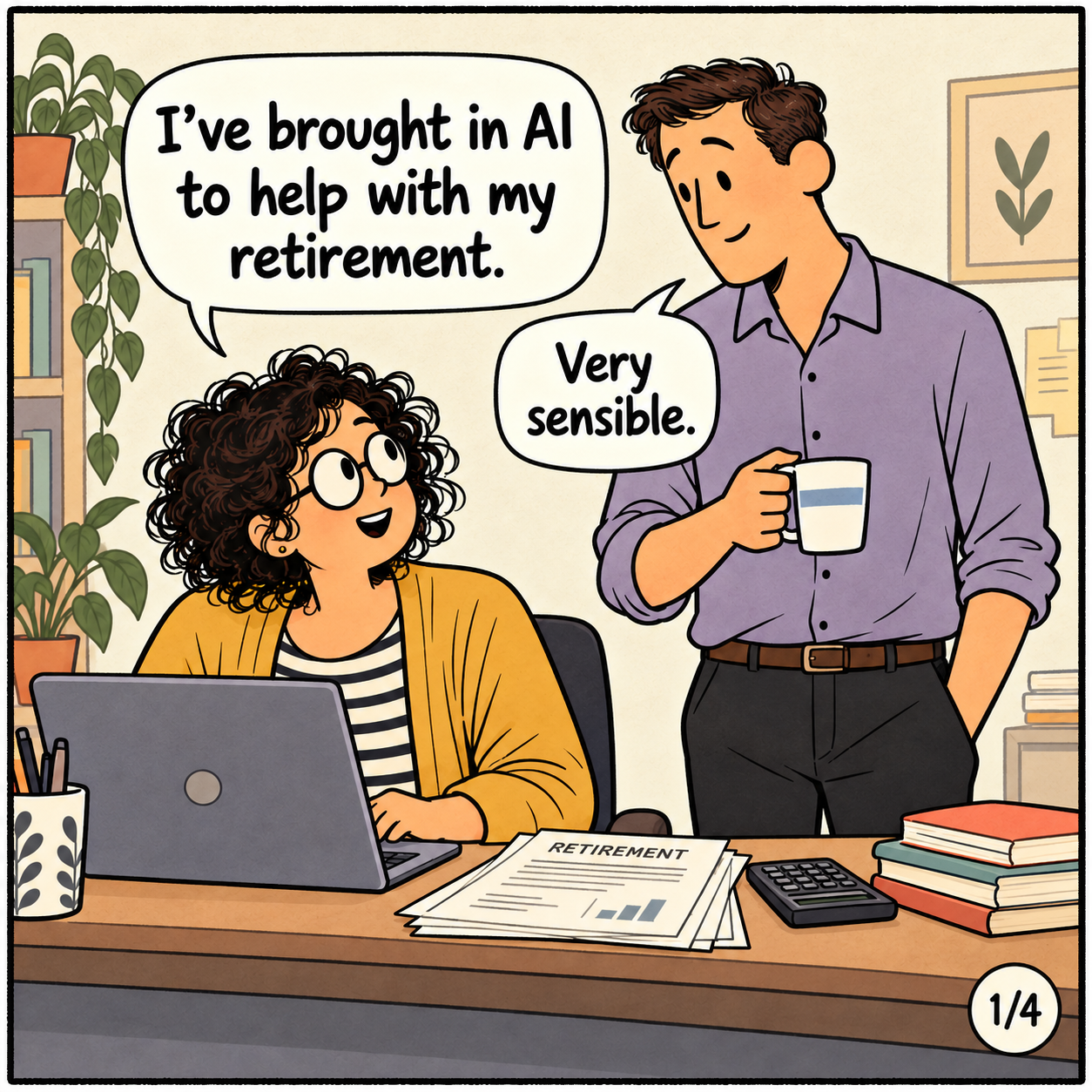
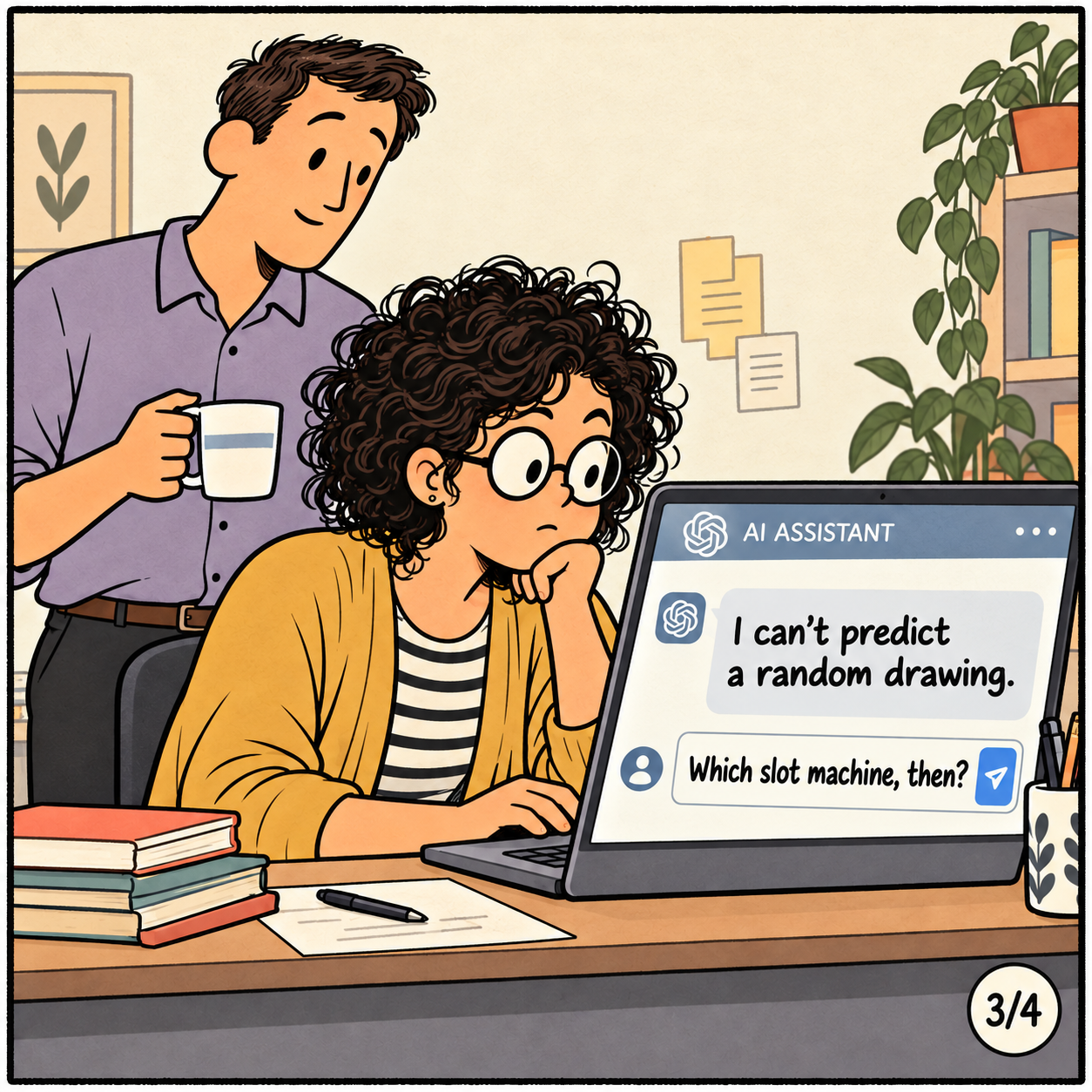
She brought in AI to help with her retirement plan. Very sensible. Then she asked it to pick the winning lottery numbers. It declined. She asked which slot machine, then. The consultant lacks vision.
She brought in AI to help with her retirement plan.
Very sensible.
This is a very specific kind of disappointment.
She didn't ask AI to do something unreasonable. Retirement planning is exactly the kind of problem AI is supposed to be good at — organizing information, modeling scenarios, thinking through tradeoffs. "Very sensible," he said, and he was right.
But somewhere between opening the laptop and the first prompt, the plan shifted. Not to planning, exactly. To winning. To finding the shortcut that makes the planning unnecessary. Pick the numbers. Name the machine. Just tell me which one.
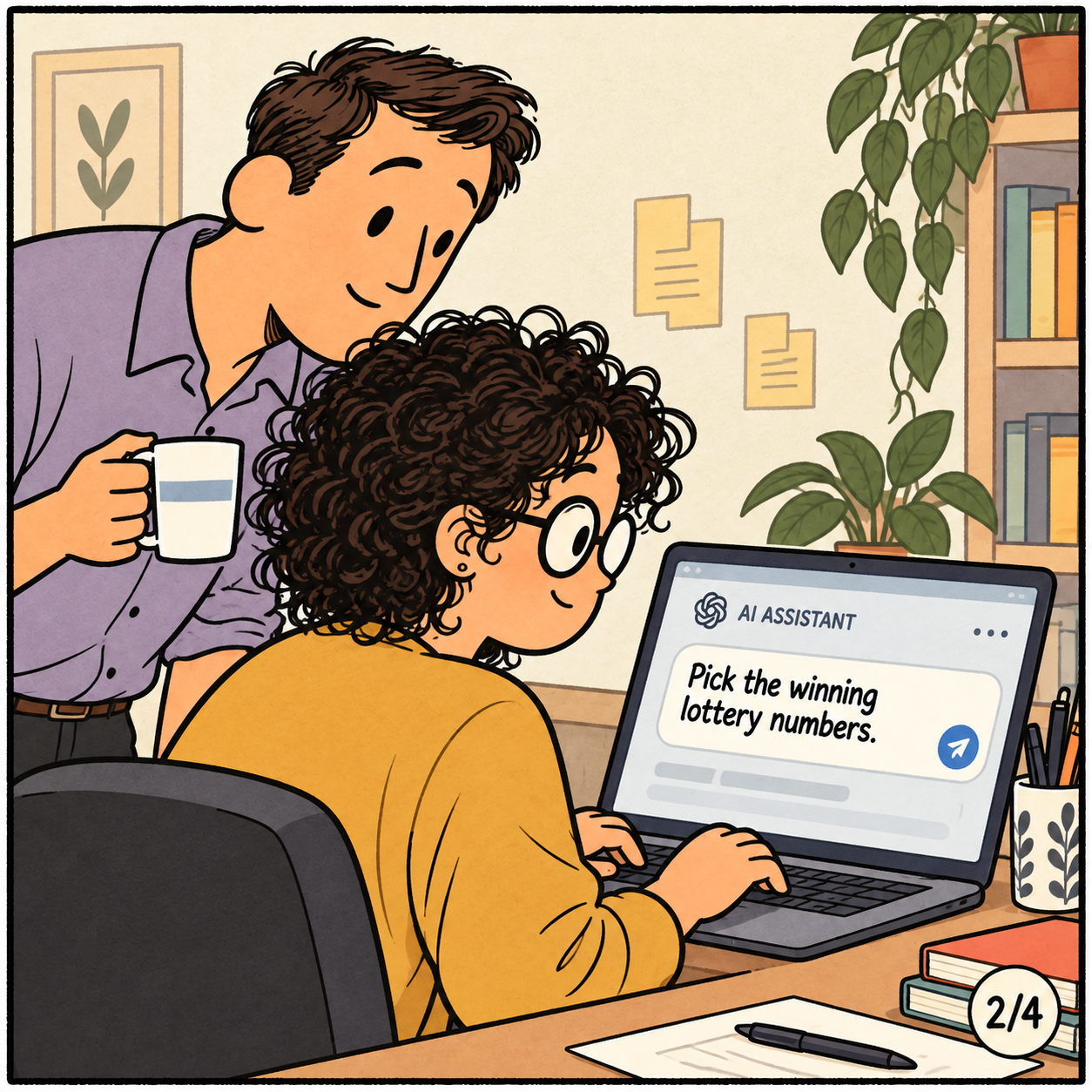
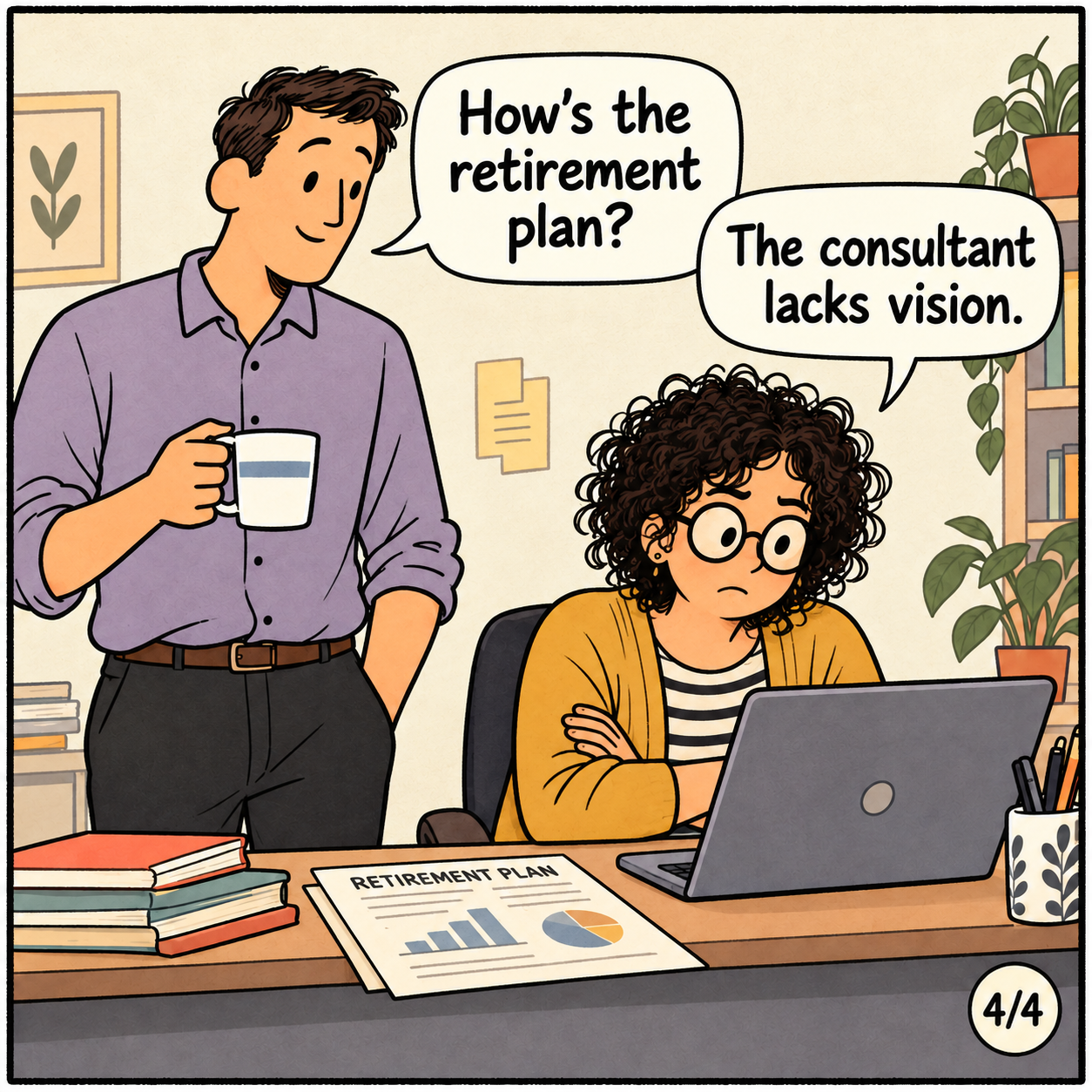
And when the tool declined — correctly, honestly, because it genuinely cannot predict a random drawing — the verdict was not "I asked for the wrong thing." The verdict was: the consultant lacks vision.
This is the pattern. We bring in a capable tool, give it an impossible task, and when it fails the impossible task, we conclude the tool is limited. We don't revise the task. We don't return to the original, reasonable problem. We look for a different tool that will tell us what we want to hear.
We the people are very good at this. We are excellent at framing a wish as a strategy, and excellent at blaming the advisor when the wish doesn't come true.
The retirement plan is still on the desk. The calculator is right there. The AI, for what it's worth, is still open and ready to help with the actual problem.
The consultant is waiting.