
Good Intentions: Clearer
They paid to get checked in advance. Then they got checked again. Then a doctor appeared. Then came the premium bypass lane. A Good Intentions comic on what happens when a good idea keeps expanding — and who ends up paying for each new layer.
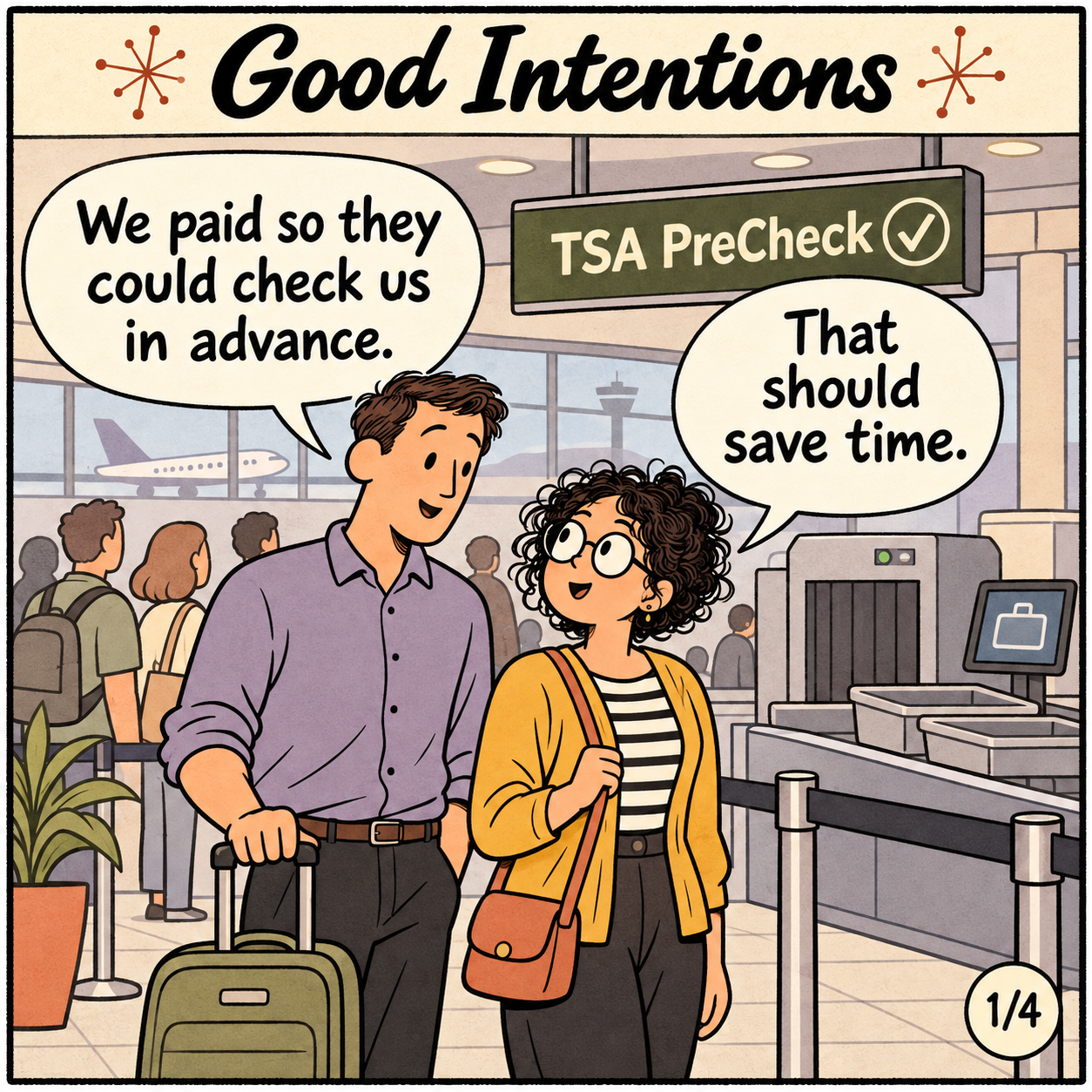
They paid so they could be checked in advance. That should save time.
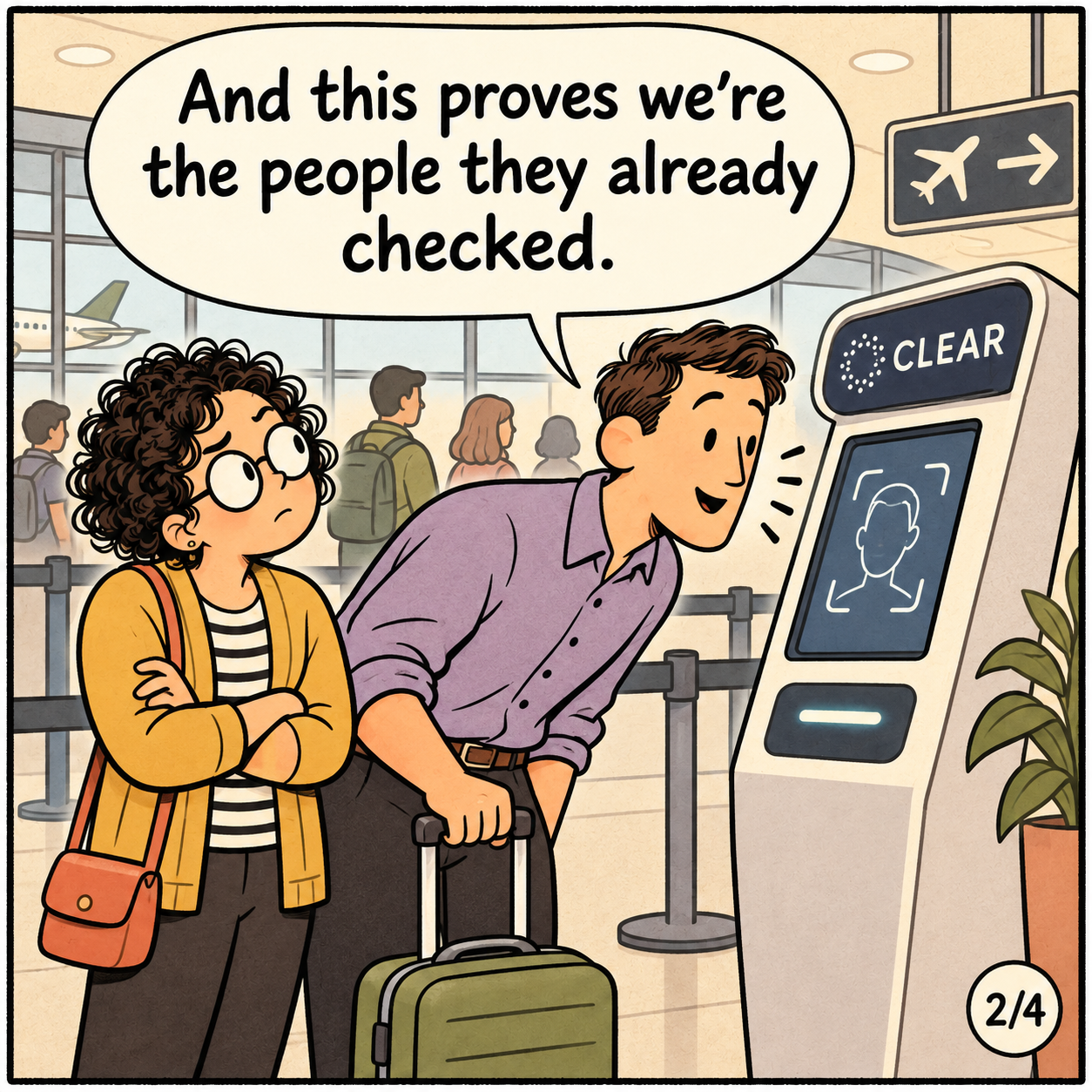
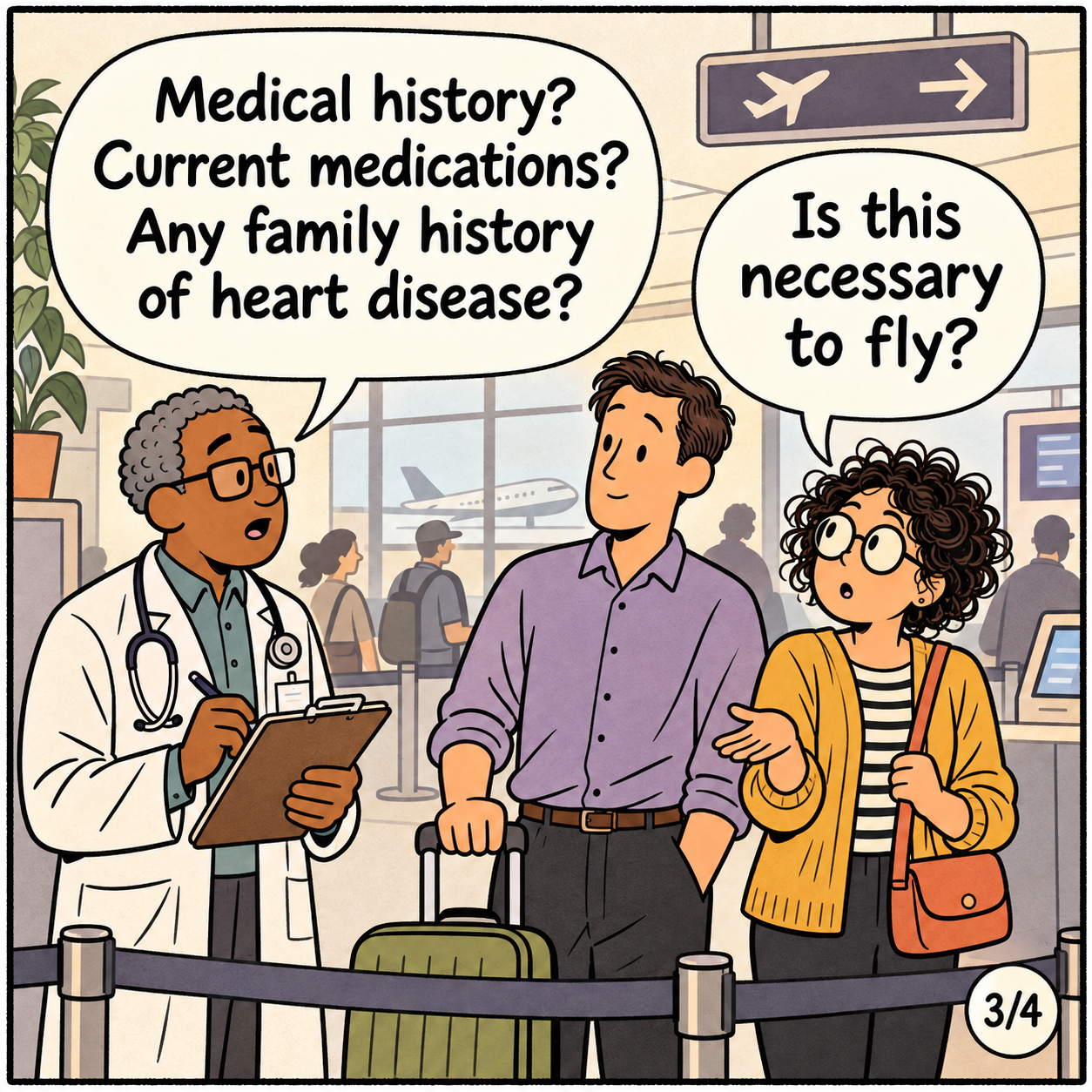
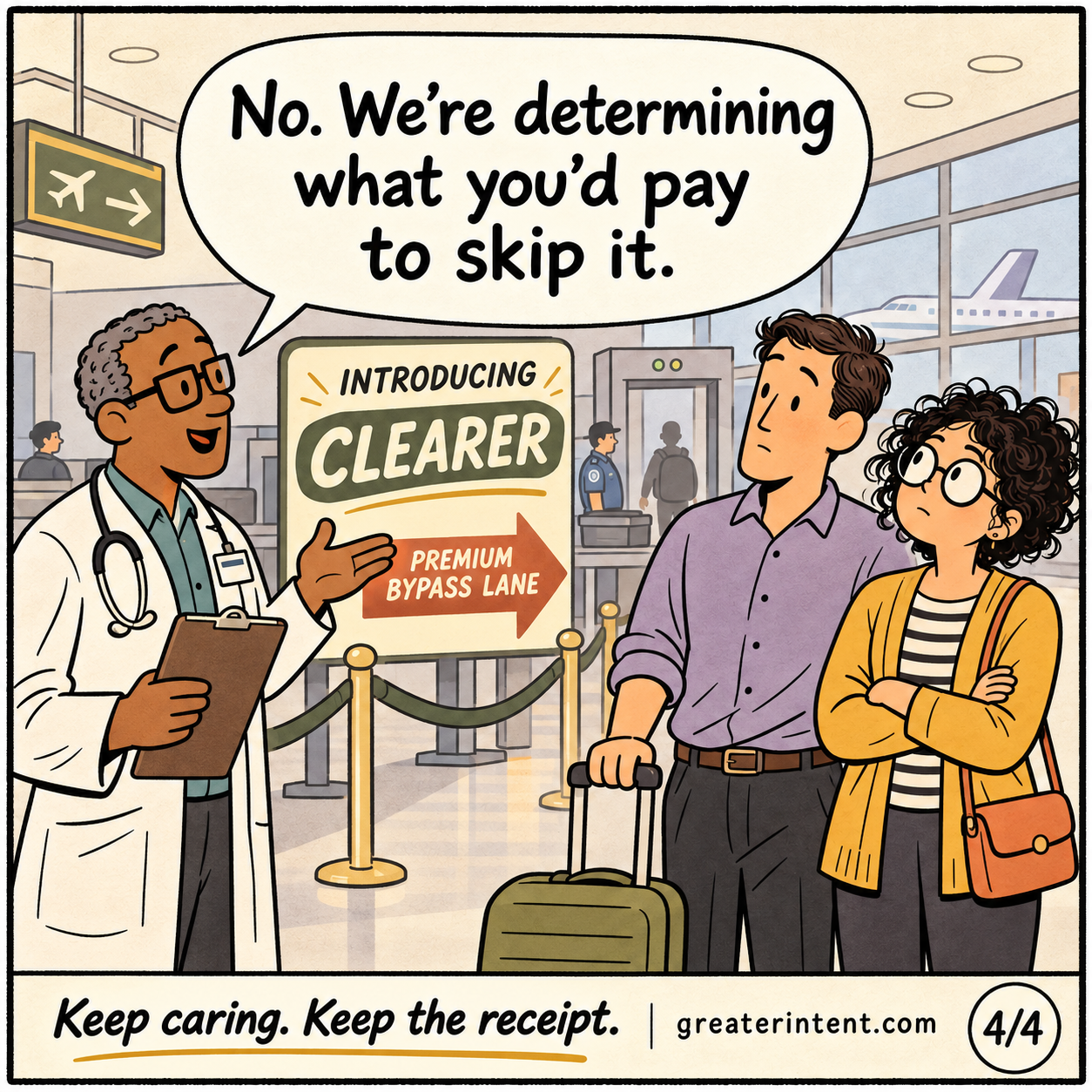
Then they got to the airport and got checked again. Then a doctor appeared with a clipboard. Then came the premium bypass lane.
CLEAR is expanding into health screening. The pitch is that biometric identity verification plus health data creates a more complete picture of who you are — and that a more complete picture means a smoother, faster, safer experience.
That's the good intention. It usually is.
*Why We Can't Stop Caring* spends a lot of time on this pattern: the way systems that start as genuine improvements tend to expand until the expansion itself becomes the product. TSA PreCheck was a real convenience. CLEAR was a faster version of that convenience. The next layer isn't faster — it's just more. More data, more checkpoints, more friction that can be monetized away if you're willing to pay.
The doctor in this comic isn't a villain. He probably believes in what he's selling. That's the part the book keeps returning to: the people running these systems usually started with something real. The problem isn't bad intentions. It's what happens when a good idea learns that the problem it solved is worth more unsolved — that the anxiety it was supposed to relieve is actually the asset.
"We're determining what you'd pay to skip it" is the most honest thing anyone in airport security has ever said.
The couple in this comic paid to get checked in advance. They're about to pay again to skip the check they just paid to get. The system is working exactly as designed.
*Why We Can't Stop Caring* is about what we do when we notice that.