
Good Intentions: 'Could' Became 'Will' Somewhere Around the Third Person
A politician says they'll consider rules for AI. The news cycle does the rest. A four-panel Good Intentions comic on how language softens accountability before it even starts.
A politician says they'll consider rules for AI.
That's not a promise. That's not even a plan. That's a sentence designed to survive a news cycle.
"We'll consider" became "could affect" became "darkens" became "did they pass something?"
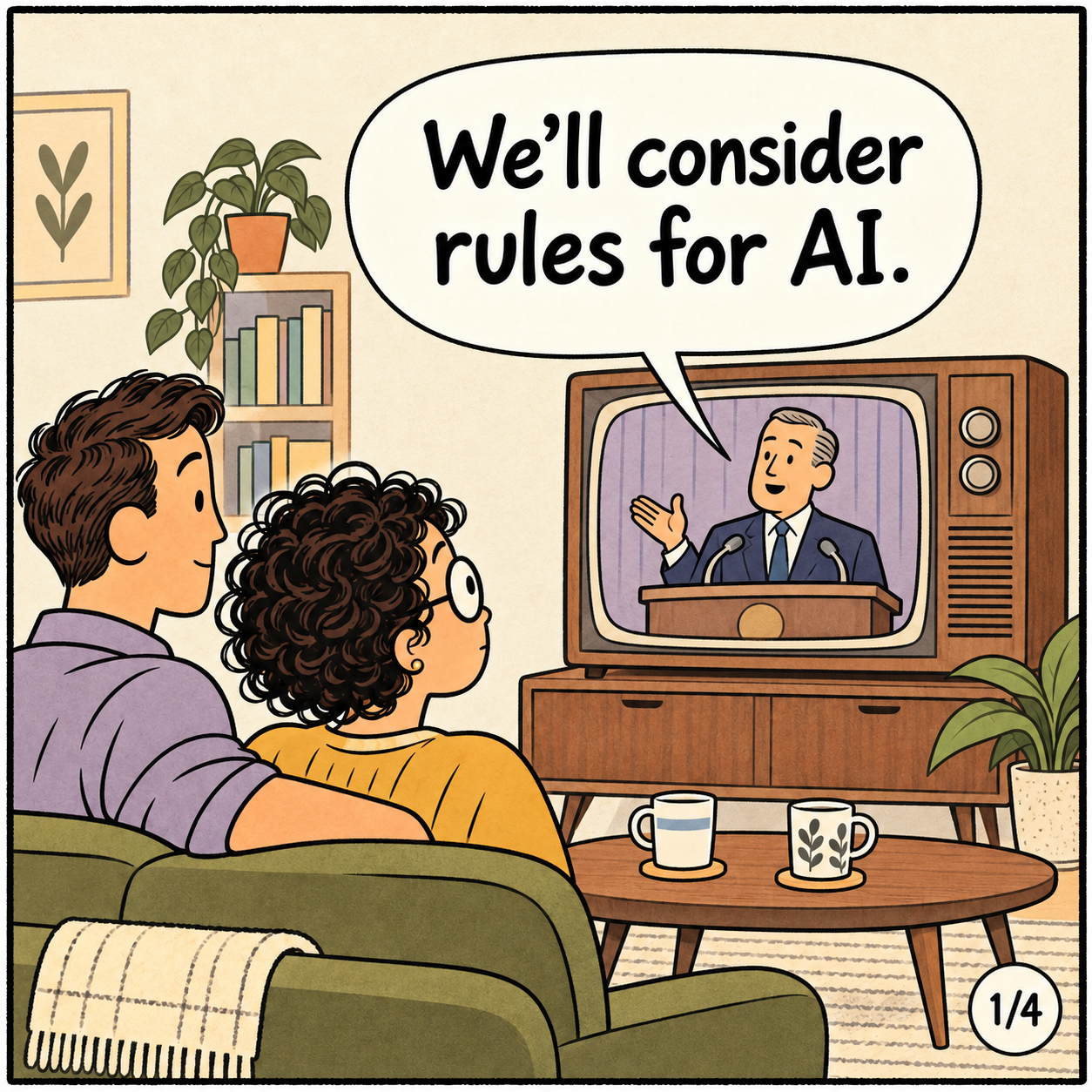
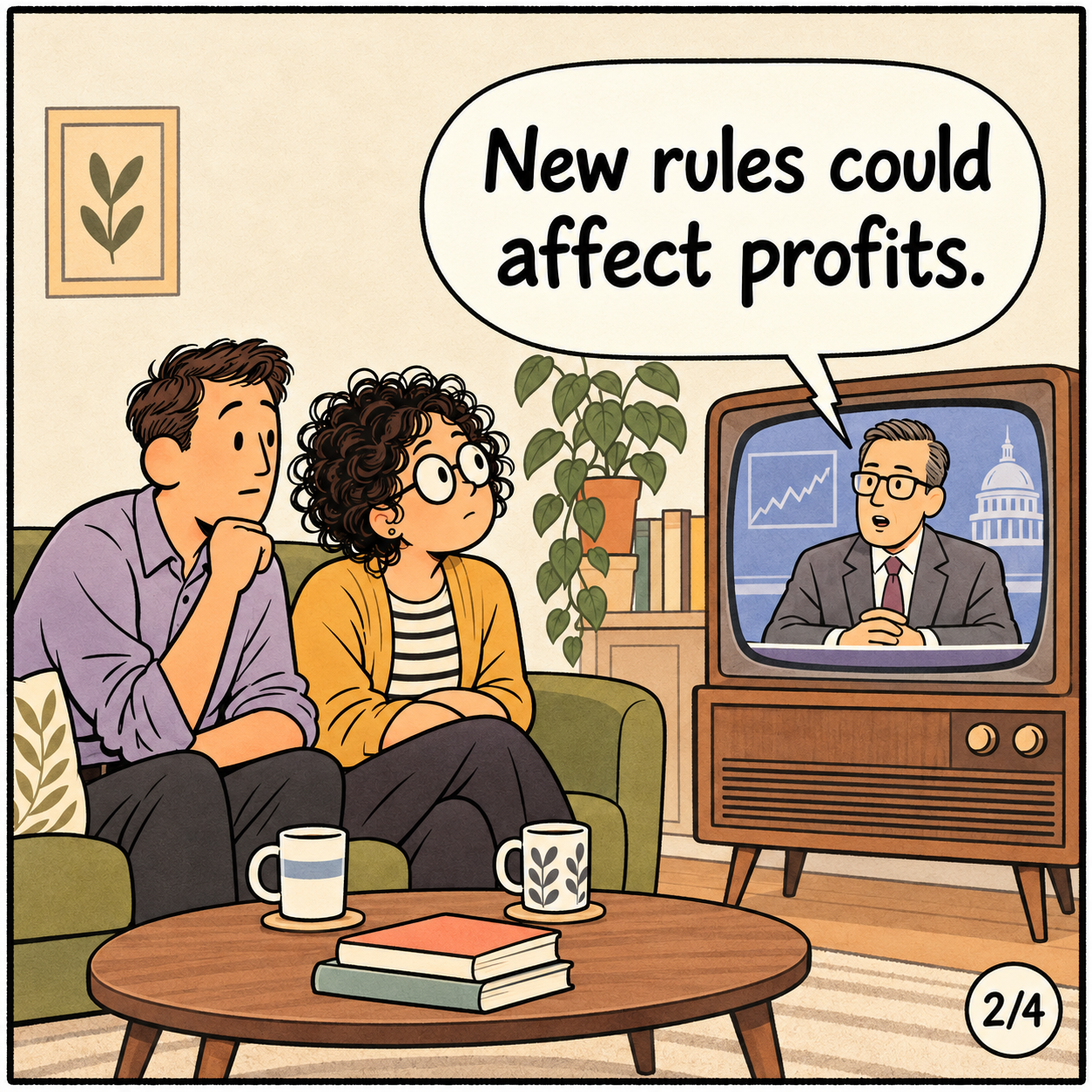
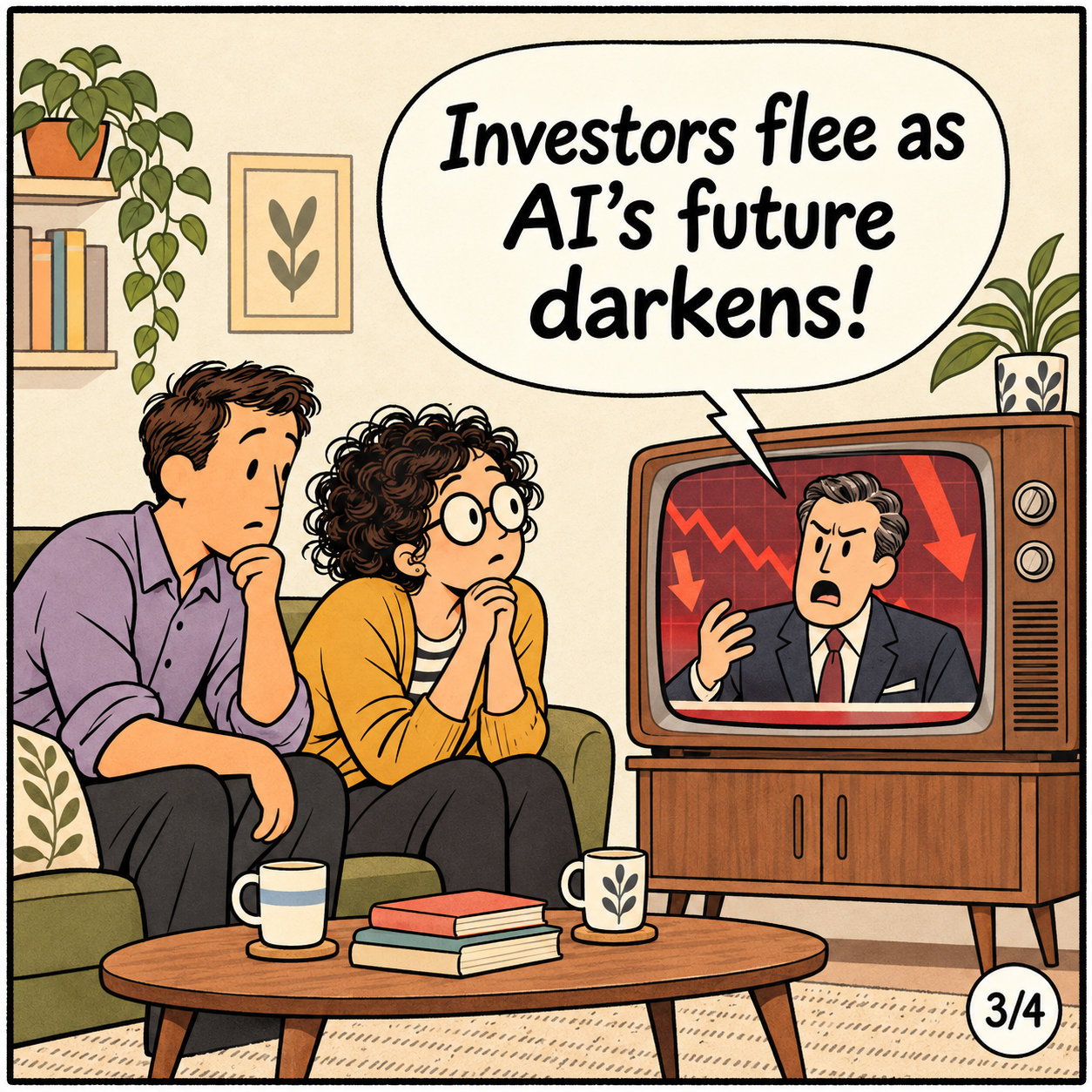
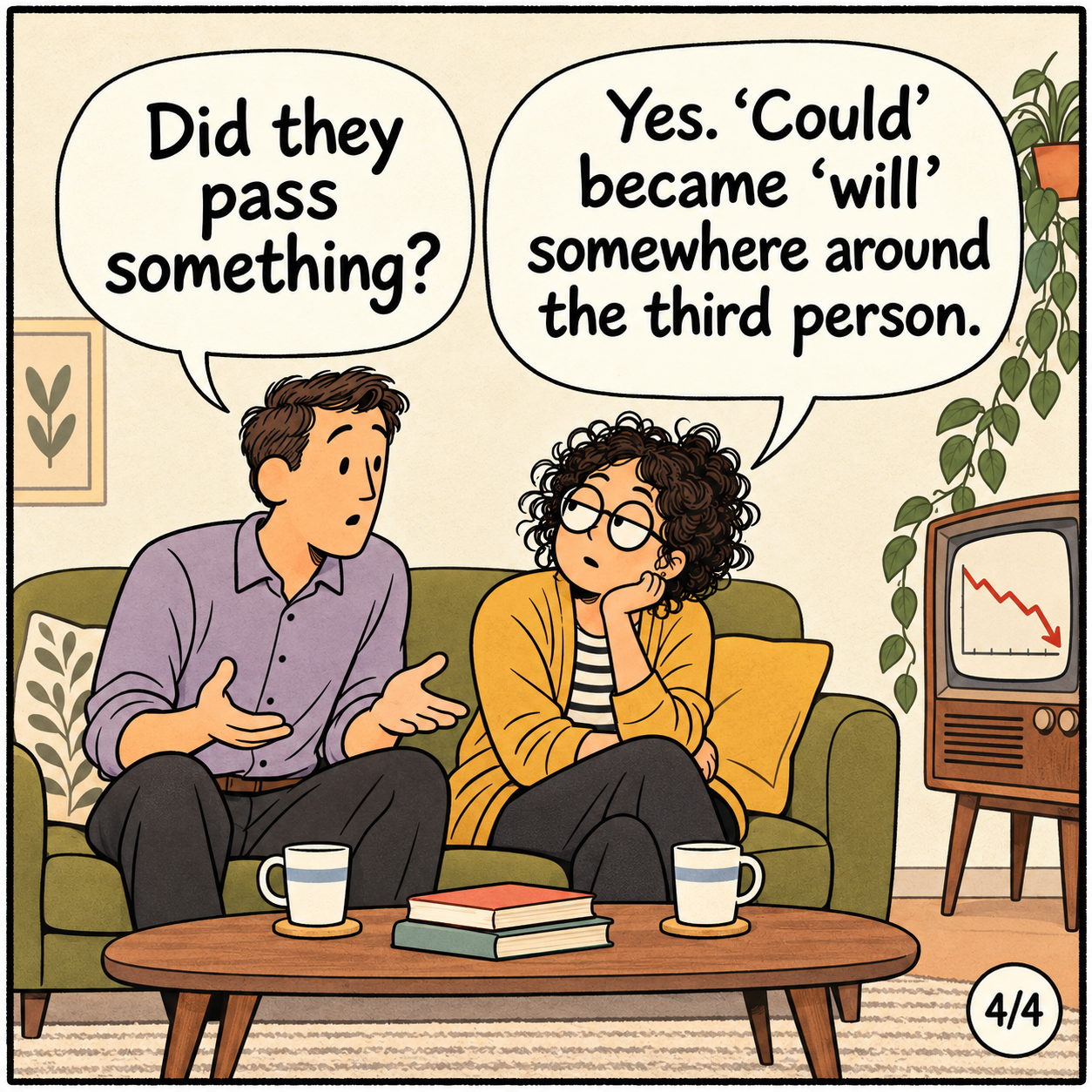
Nobody lied, exactly. Each step just added a little more certainty than the last, until the original statement — which committed to nothing — became news that moved markets.
This is how accountability gets lost before it even starts. Not through deception, but through the ordinary mechanics of how information travels. Each person in the chain is just doing their job. The original speaker said something careful. The anchor made it interesting. The chyron made it urgent. The couple at home tried to figure out what actually happened.
We the People are, in fact, bad at this — not because we're not paying attention, but because the system between the statement and our understanding has a lot of moving parts, and most of them are optimized for something other than accuracy.