
The Algorithm Noticed
She said 'favorites.' The shelf was listening. A four-panel look at AI-powered pricing and the small ways we've already started negotiating with machines.
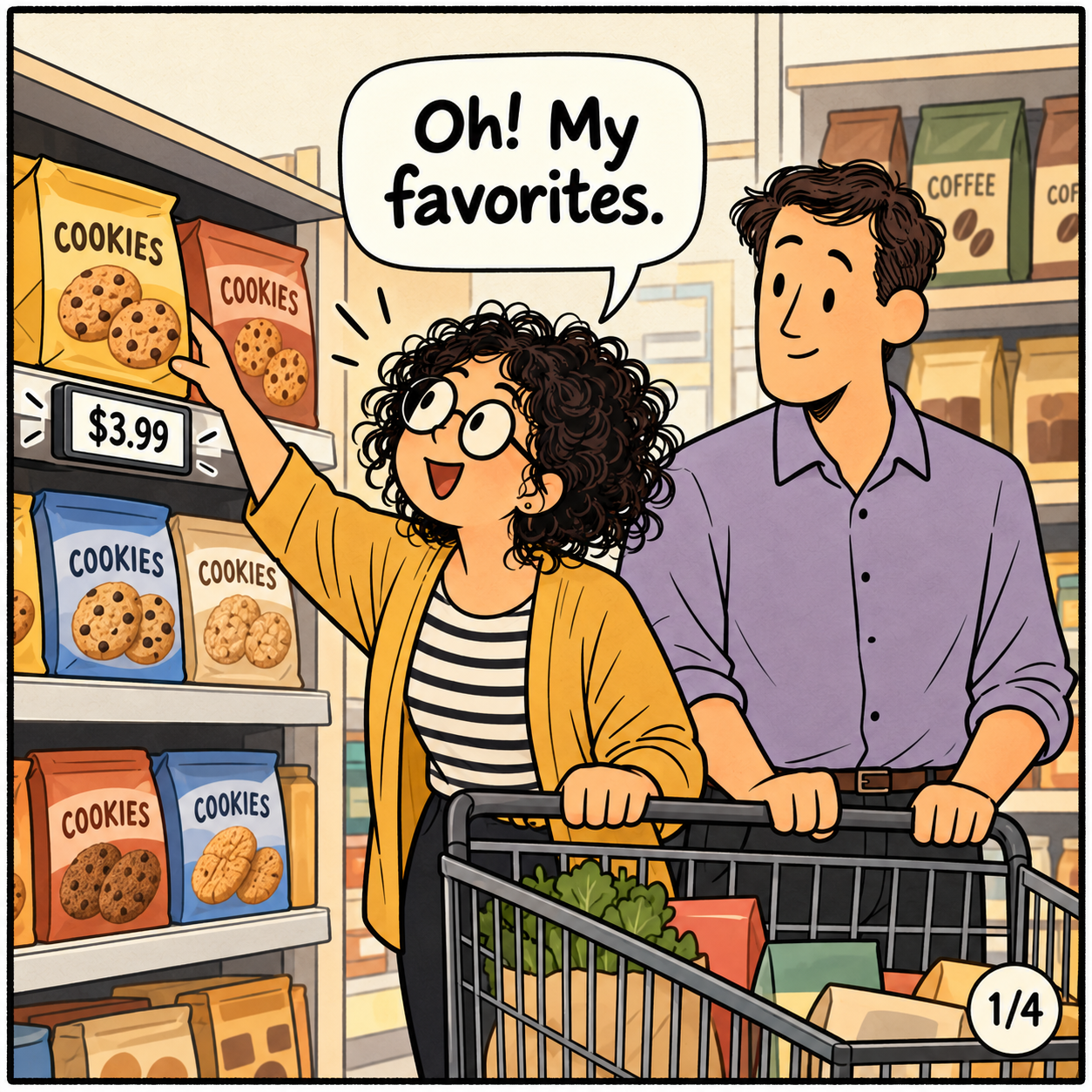
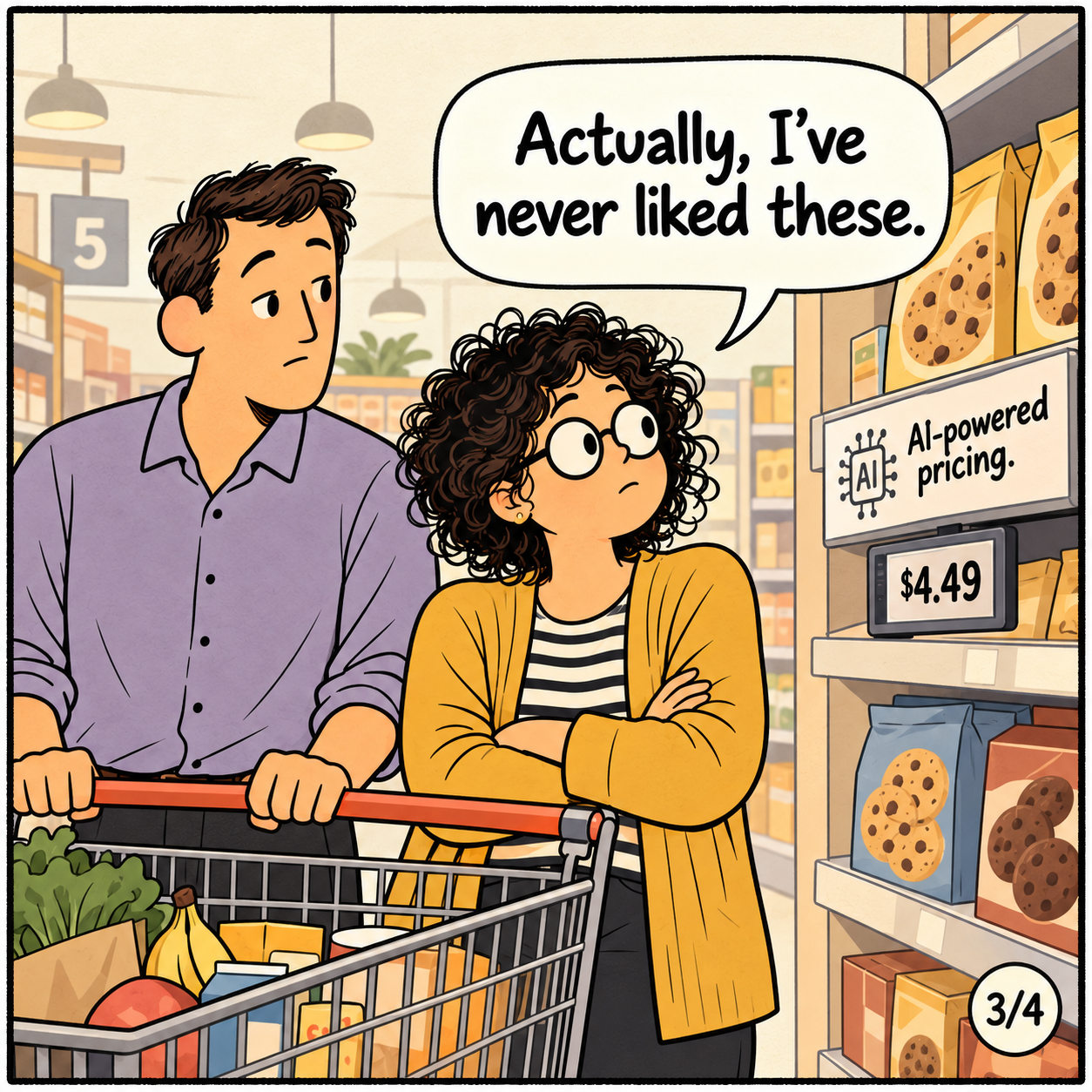
She said "favorites." The shelf was listening.
There's a moment in every grocery run when you stop performing for the algorithm and just want your cookies.
The trouble is, the shelf is paying attention now.
AI-powered dynamic pricing has been quietly moving from airline tickets and hotel rooms into everyday retail. The logic is straightforward: charge what the moment will bear. If you reach for something with enthusiasm, that enthusiasm is data. If you hesitate, that's data too.
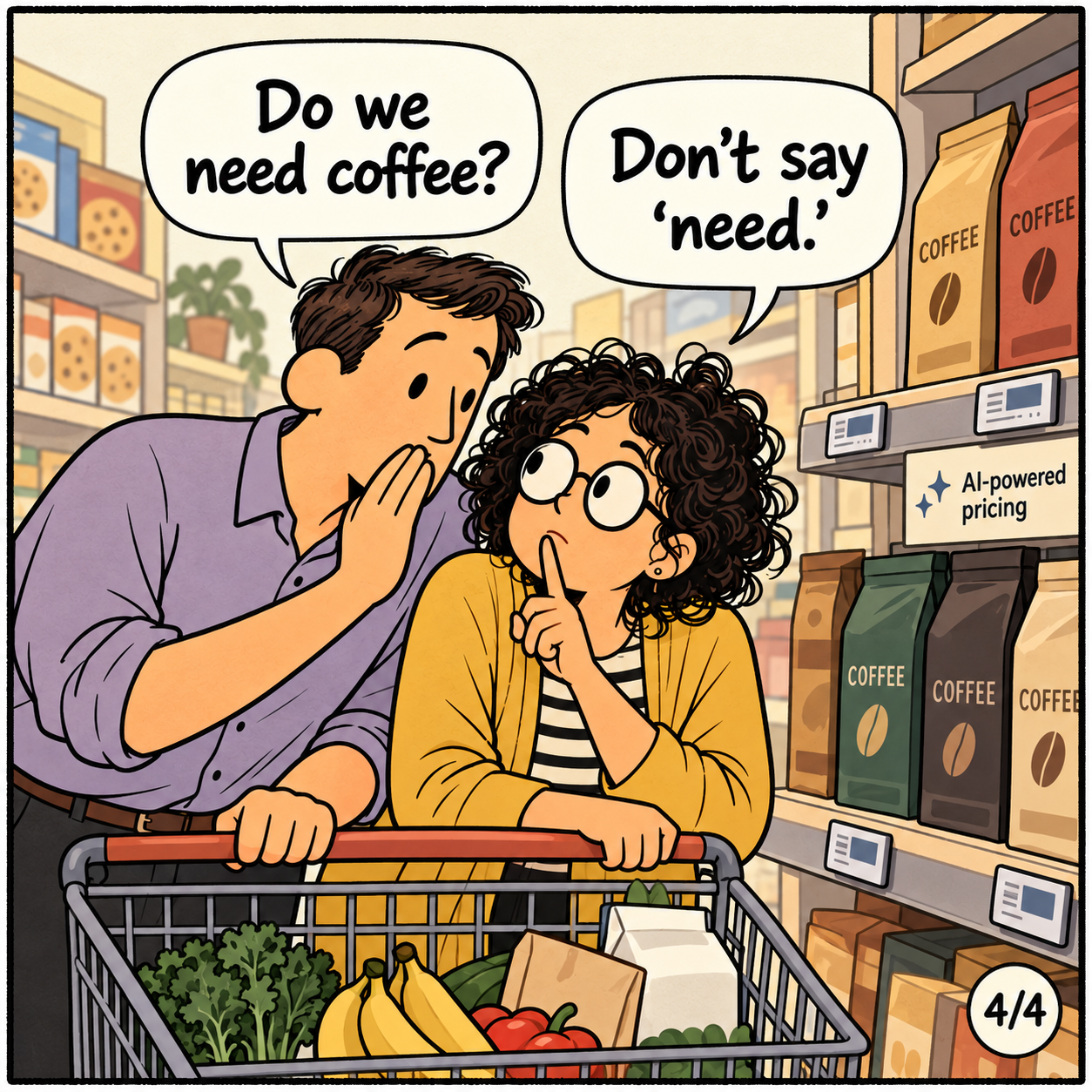
What this comic captures — and what makes it land — is how quickly we adapt. Within two panels, she's already learned the game. Arms crossed. Flat affect. "Actually, I've never liked these." The price drops. She's not wrong to do it. She's just doing what people do when the rules of an exchange shift without their consent: they adjust.
This is a *We the People Are Bad at This* situation. Not because the technology is evil, but because we keep building systems that treat human preference as a resource to extract rather than a signal to respect. And then we're surprised when people start masking their preferences to survive the system.
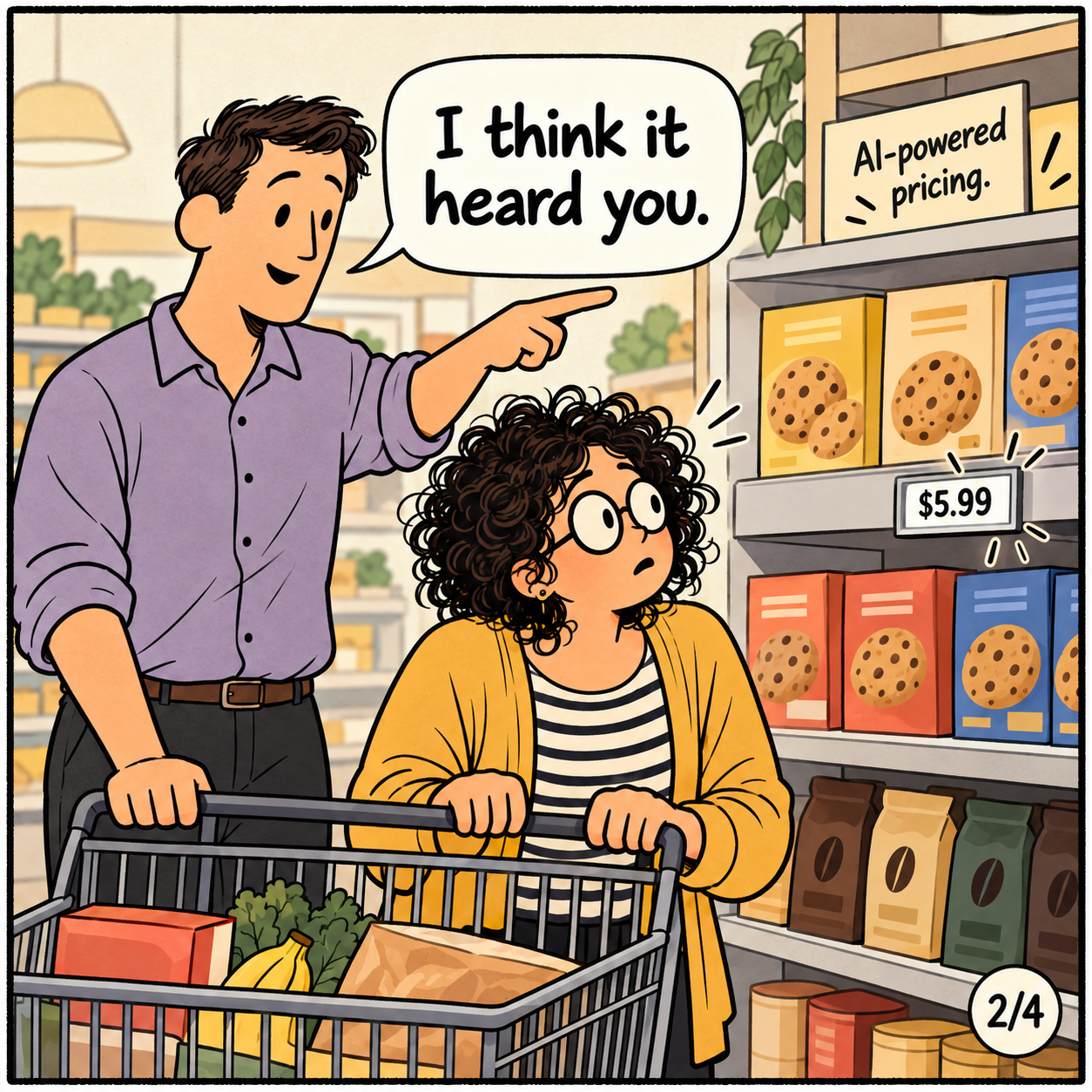
The whisper at the end — *Don't say 'need'* — is the tell. That's not a joke about coffee. That's a couple who has already internalized that expressing genuine desire is a liability. They've started editing themselves in real time, in a grocery store, because the shelf is listening.
We're not bad at technology. We're bad at noticing when technology changes what it costs to be honest.
That's the thing worth watching.